Self Compacting Concrete: A Complete Guide for Modern Construction
- Jan 19
- 6 min read
Concrete plays a central role in shaping how efficiently and safely a structure is built. Among the different types of concrete used today, Self Compacting Concrete (SCC) has emerged as one of the most advanced because it eliminates the need for vibration during placement. For modern house construction, especially in densely reinforced areas or structures with complex shapes, SCC concrete offers superior workability and long-term durability.
This guide explains what self compacting concrete is, how it works, where it is used, and why it is becoming an important type of concrete in residential and commercial construction.
1. What Is Self Compacting Concrete?
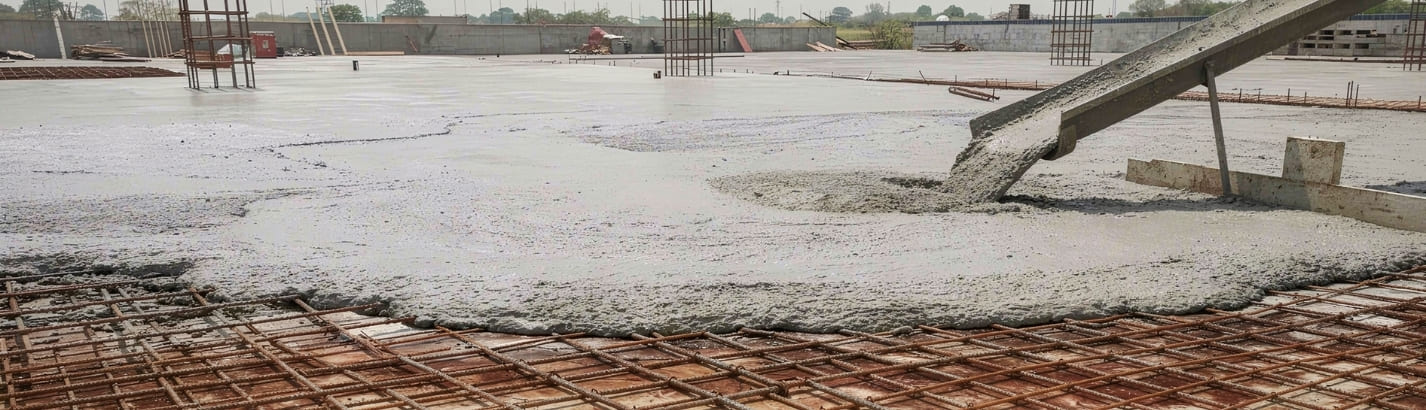
Self compacting concrete (SCC) is a high-performance type of concrete that flows under its own weight. It spreads into formwork, passes through congested reinforcement, fills every corner, and achieves full compaction without vibration.
Traditional concrete needs mechanical vibration to remove air pockets. SCC concrete eliminates this process entirely. The mix is designed with:
Higher fines content
Special admixtures
Optimized water-cement ratio
Controlled aggregate sizes
This combination makes it fluid, uniform, and capable of settling into place without segregation.
How SCC Differs from Conventional Concrete
Conventional concrete requires physical compaction. SCC does not. It fills the formwork simply by flowing, making it ideal for complex structural elements and narrow formwork.
Basic Ingredients
Fine aggregates
Coarse aggregates (smaller size)
Water
Mineral admixtures (fly ash, silica fume, GGBS)
Chemical admixtures (superplasticizers, viscosity modifiers)
The mineral and chemical additives control flowability and prevent segregation.
2. Why SCC Concrete Is Used in House Construction
Self compacting concrete is widely used in high-rise buildings, bridges, tunnels, and industrial structures. But it’s also increasingly becoming popular in house construction.
Here’s why:
Faster Construction
Since SCC eliminates vibration, pouring and placing become faster, especially for slabs, beams, and columns.
Better Surface Finish
SCC produces smooth, defect-free surfaces. Walls and columns need minimal plastering, lowering finishing costs.
Improved Quality and Durability
Manual compaction often leads to honeycombing. SCC's ability to fully compact on its own ensures uniform strength throughout the structure.
Ideal for Tight Reinforcement
Modern homes with architectural features like slim beams or designer staircases benefit from SCC because it flows into tight spaces effortlessly.
Lower Labour Requirements
No vibration means fewer workers needed for slab casting and beam construction, reducing total labour cost.
3. Key Properties of Self Compacting Concrete
SCC concrete is designed with specific performance criteria. The following properties define its unique behaviour:
1. Filling Ability
The concrete flows freely into all parts of the formwork. This is measured through tests such as the slump flow test.
2. Passing Ability
SCC can pass through congested reinforcement without blocking. The L-Box test is used to evaluate this.
3. Resistance to Segregation
Even with its fluid nature, SCC concrete remains stable. The fines and admixtures ensure that aggregates do not settle at the bottom.
4. High Workability
SCC remains workable longer, giving workers more time to place it accurately during slab casting or column work.
5. Strength and Durability
SCC is dense, compact, and highly resistant to cracks, making it suitable for long-lasting house construction.
4. Composition and Mix Design
Creating self compacting concrete requires careful control over mix design. The balance between powder content, water-cement ratio, aggregates, and admixtures determines its quality.
Cement and Powders
SCC contains higher powder content (cement + supplementary materials) compared to normal concrete. Fly ash, GGBS, or silica fume improve flowability and reduce heat of hydration.
Water-Cement Ratio
A low water-cement ratio is used to maintain strength. Superplasticizers improve workability without increasing water content.
Fine Aggregates
A higher proportion of fine aggregates ensures a smoother flow.
Coarse Aggregates
Smaller aggregate sizes (often 10 mm or 12.5 mm) make the concrete flow freely through reinforcement.
Chemical Admixtures
High-range water reducers (superplasticizers) maintain flow. Viscosity modifying agents prevent bleeding and segregation.
A typical mix might look like:
Powder content: 400–600 kg/m³ (<0.125 mm)
Water content between 150 to 210 kg/m3
Aggregate ratio: 28–35 percent coarse, rest fine aggregate
Use of high range water reducing admixture like polycarboxylate ether based high range water reducing admixture (water reduction > 30 percent) and sometimes also using a viscosity modifying admixture (VMA) in appropriate dosages. Actual mix varies based on application and engineer recommendations.
5. Advantages of Self Compacting Concrete
SCC is known for its numerous benefits, especially where quality and speed matter.
Improved Structural Performance
Because it compacts on its own, SCC eliminates voids, reduces permeability, and increases durability.
Reduced Noise in Construction
No vibration means quieter sites, which is especially useful for house construction in residential neighbourhoods.
Faster Construction Cycle
Columns, slabs, and beams can be cast quickly. Reduced labour and faster placement shorten timelines.
Lower Finishing Requirements
SCC creates smooth surfaces with minimal honeycombing. This reduces plastering thickness and cost.
Enhanced Safety
Labourers no longer need to handle heavy vibrators on scaffolding, reducing risks during slab construction and wall casting.
6. Disadvantages of Self Compacting Concrete
Despite its many strengths, SCC does have some limitations.
Higher Material Cost
Admixtures and extra fine materials increase the cost per cubic meter compared to normal concrete.
Need for Skilled Handling
Improper mix design may lead to segregation. Skilled supervision ensures proper batching and placement.
Not Ideal for Every Application
For simple house projects with minimal reinforcement, standard concrete may be more economical.
7. Applications of SCC in Construction
SCC is widely used in:
Residential Construction
Columns
Beams
Slabs with dense reinforcement
Shear walls
Basements and retaining walls
Commercial and Industrial
Parking structures
Precast concrete elements
Infrastructure
Bridges
Piers
Tunnel linings
Its flowability makes it indispensable in complex structural elements.
8. SCC vs Conventional Concrete
A clear comparison helps understand why SCC is different from other types of concrete.
Feature | SCC Concrete | Conventional Concrete |
|---|---|---|
Compaction | No vibration required | Requires mechanical vibration |
Surface finish | Smooth, uniform | Often needs plastering |
Labour requirement | Lower | Higher |
Speed of construction | Faster | Moderate |
Workability | Very high | Limited |
Cost | Higher | Lower |
While SCC is costlier, the savings in labour, time, and finishing often balance the expense.
9. SCC in House Construction: Practical Tips
If you’re planning to use self compacting concrete in a home project, keep the following in mind:
1. Ensure Proper Formwork Strength
SCC is highly fluid, so formwork must be strong and leak-proof.
2. Use Approved Admixtures
Always use tested admixtures to maintain flow and stability.
3. Maintain Pouring Speed
Slow pouring may cause cold joints. Continuous casting produces the best results.
4. Avoid Excessive Height Drops
Dropping SCC from large heights can cause segregation. Use chutes or pumps.
5. Follow Standard Tests
Perform slump flow, L-box, and segregation resistance tests for every batch.
Final Thoughts
Self compacting concrete is a remarkable type of concrete that has transformed modern construction practices. Its ability to flow freely, fill formwork without vibration, and deliver superior finish quality makes it a strong choice for house construction as well as large-scale structural projects. Although SCC concrete costs slightly more than conventional concrete, the savings in labour, time, and finishing often compensate for the higher material price.

Cookies help us display personalized product recommendations and ensure you have a great experience.
Accept Cookies