What Is a Lintel? Understanding the Beam That Holds It All Together
- Dec 8
- 7 min read
When you walk through a doorway or look out a window, you probably don’t notice the sturdy beam quietly doing its job above the opening. That’s the lintel, a small but crucial element in every structure.
In the world of construction, lintels may not get as much attention as foundations or slabs, but they play an equally important role in keeping a building safe and stable. Without a proper lintel, even the most beautifully built wall could start to crack or crumble over time.
So, what exactly is a lintel? How is it constructed? And why is it so important? Let’s break it down in simple terms.
What Is a Lintel?
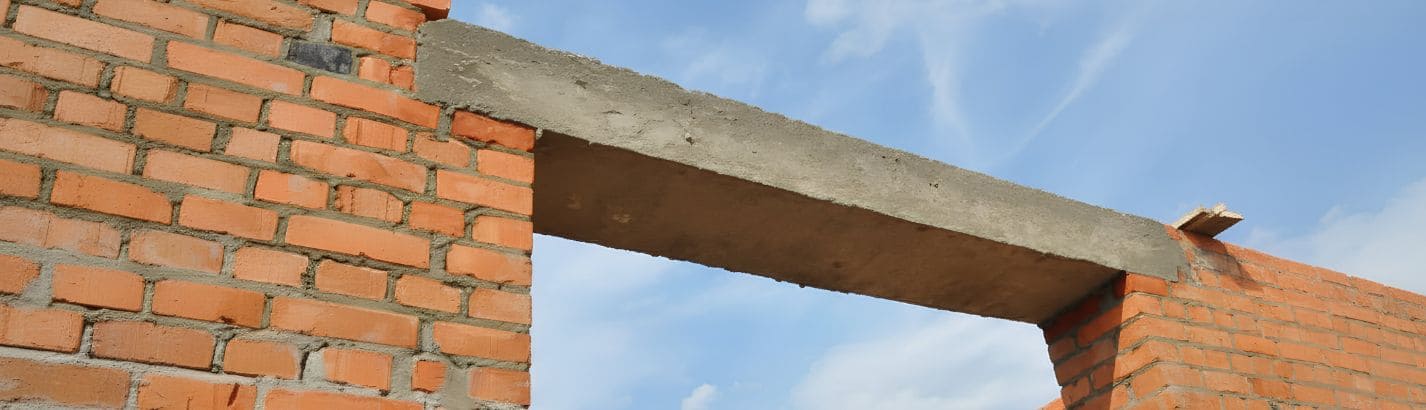
A lintel is a horizontal structural beam placed over doors, windows, and other openings in a wall to support the weight of the structure above them.
Think of it as a mini beam that bridges the gap created by an opening. When you make a hole in a wall for a door or window, the load from above can’t just “float”; it needs to be transferred safely to the sides. The lintel handles that load and distribute it evenly to the wall’s vertical supports.
Without it, the wall would be under uneven pressure, leading to cracks around the openings or, in extreme cases, structural failure.
The Function of a Lintel
Lintels might look simple, but they perform several important structural functions:
Load Distribution: The primary role of a lintel is to carry the load from the wall or roof above the opening and distribute it to the adjacent masonry.
Structural Stability: It helps maintain the structural continuity of the wall and prevents sagging or cracking.
Aesthetic Integration: Lintels allow architects to include large openings (like windows and doors) without compromising stability, giving homes both light and beauty.
Protection Against Stress Cracks: By balancing loads properly, lintels prevent stress concentration at weak points around openings.
In short, the lintel is the unsung hero that keeps your walls standing tall and your windows safe.
Types of Lintels Used in Construction
Different materials and designs are used for lintel construction, depending on the size of the opening, load requirements, and architectural design.
Let’s look at the most common types:
1. Reinforced Cement Concrete (RCC) Lintel
This is the most widely used lintel in modern construction. It’s strong, durable, and suitable for all types of buildings.
Features:
Made from concrete reinforced with steel bars.
It can bear heavy loads and large spans.
Often cast in place (on-site) or prefabricated.
Why it’s popular:
RCC lintels are fire-resistant, long-lasting, and provide a clean finish that fits both residential and commercial buildings.
2. Brick Lintel
Used mainly in low-cost or small-span constructions.
Features:
Made by arranging bricks on edge with cement mortar.
Suitable for openings up to 1 meter wide.
Limitations:
Not suitable for large openings or heavy loads, as bricks have limited tensile strength.
3. Stone Lintel
One of the oldest forms of lintel construction, commonly seen in traditional or heritage buildings.
Features:
Made from thick stone slabs placed over openings.
Very durable and weather-resistant.
Limitations:
Heavy and difficult to install; also unsuitable for long spans.
4. Steel Lintel
Ideal for large openings and industrial or commercial buildings.
Features:
Made using rolled steel sections like I-beams or channels.
Can cover wide spans and support heavy loads.
Why it’s used:
Strong, durable, and easy to install. Often combined with concrete or brickwork for added support.
5. Timber Lintel
Used in traditional or temporary structures.
Features:
Made from hardwood planks or beams.
Easy to install and work with.
Limitations:
Vulnerable to termites, decay, and fire. Rarely used in modern construction except for restoration or aesthetic purposes.
Lintel vs. Beam: What’s the Difference?
Many people confuse lintels with beams since both are horizontal structural elements. But they serve different purposes.
Aspect | Lintel | Beam |
|---|---|---|
Location | Above doors and windows | Anywhere in the structure (supports slabs, floors, etc.) |
Function | Transfers the load from the wall above the opening | Supports load from slabs, floors, and walls |
Load Type | Mostly masonry load | Structural and live load |
Span | Small (up to 2.5 m typically) | Can span large distances |
Reinforcement | Usually light or moderate | Heavily reinforced |
Simply put, all lintels are beams, but not all beams are lintels. The lintel’s role is more localized; it protects openings.
How Lintel Construction Is Done
Here’s a step-by-step overview of how lintel construction is carried out on-site:
Formwork Preparation: A wooden or steel shuttering frame is built in the shape of the lintel. It should be strong enough to hold wet concrete without bending.
Reinforcement Placement: Steel bars are arranged according to design specifications, usually 2–3 main bars with stirrups for binding. Should be in the form of rectangular beam.
Preferably, proper bearing should be provided on both sides of the opening, not less than 6 inches on each side and up to 9 inches as per the size of the opening.
Concrete Pouring: Concrete (commonly M20 or M25 grade) is poured and compacted to remove air voids.
Curing: The lintel is cured for at least 7–10 days to achieve full strength.
Shuttering Removal: Once the concrete sets, the formwork is carefully removed. The lintel is then integrated into the masonry work above the opening.
Proper curing is critical; neglecting it can lead to cracks and reduced load-bearing capacity.
Design Considerations for Lintels
While the size and material of a lintel vary by project, here are some general design rules engineers follow:
Depth: Usually 1/12 to 1/15 of the span. For a 1.2-meter opening, the lintel depth is around 100 mm.
Bearing Length: Lintel should rest at least 150 mm on each side of the opening.
Reinforcement: Main bars are placed at the bottom (tension zone), with stirrups for shear reinforcement.
Cover: Provide a minimum of 25 mm concrete cover over steel bars to prevent corrosion.
These details ensure that the lintel not only supports the load but also resists bending, cracking, and long-term stress.
Common Problems in Lintel Construction
Even though lintels are small compared to beams or slabs, errors during construction can lead to structural damage:
Insufficient Bearing: If the lintel doesn’t rest adequately on the wall, it may crack or fail under load.
Poor Reinforcement Placement: Incorrect positioning or lack of binding can reduce strength.
Inadequate Curing: Weakens concrete and causes shrinkage cracks.
Improper Load Transfer: The Lintel should align perfectly with the wall to distribute the load evenly.
Lack of Damp-Proof Course: If placed directly under a leaking terrace or bathroom wall, moisture can weaken the lintel over time.
Improper Compaction: Concrete should be properly compacted by vibrators in order to avoid honey combing.
Regular supervision during lintel casting ensures that none of these issues compromise your structure.
Why Lintels Matter in Modern Construction
Modern buildings often feature larger windows and open floor plans. This makes lintel construction more important than ever, as wider openings mean greater loads above them.
Lintels provide:
Safety: They prevent structural collapse around openings.
Durability: They reduce stress cracks and maintain wall integrity.
Aesthetics: Hidden within the plaster, they make modern architectural designs possible.
Without lintels, walls would have to be thicker, heavier, and less flexible, making buildings both less efficient and more expensive.
Final Thoughts
A lintel may be one of the smallest structural members in a building, but its role is anything but minor. It ensures that your walls don’t crack above windows and doors, maintains load balance, and allows for elegant design flexibility.
In short, the lintel is that quiet protector holding everything together, strong, steady, and always reliable.
So the next time you walk under a doorway, remember: above that frame is a powerful little beam silently carrying the load of your home, one brick at a time.

Cookies help us display personalized product recommendations and ensure you have a great experience.
Accept Cookies