Cement Clinker: Role, Composition, Types, and Uses
- Apr 13
- 8 min read
Key Takeaways:
Cement clinker is the kiln-formed material that gives cement its binding properties.
Clinker quality directly affects cement strength, durability, setting, and overall performance.
Clinker is produced through a step-by-step process, from raw material preparation to grinding with gypsum.
Its four main compounds – Alite, Belite, Aluminate, and Ferrite – control setting and strength development.
During hydration, clinker compounds react with water and drive cement setting and hardening.
Different clinker types are made for different needs, such as sulphate resistance, low heat, rapid strength gain, OPC cement clinker, and more.
Clinker is mainly used to produce cement for concrete, plaster, and mortar.
What is Cement Clinker?
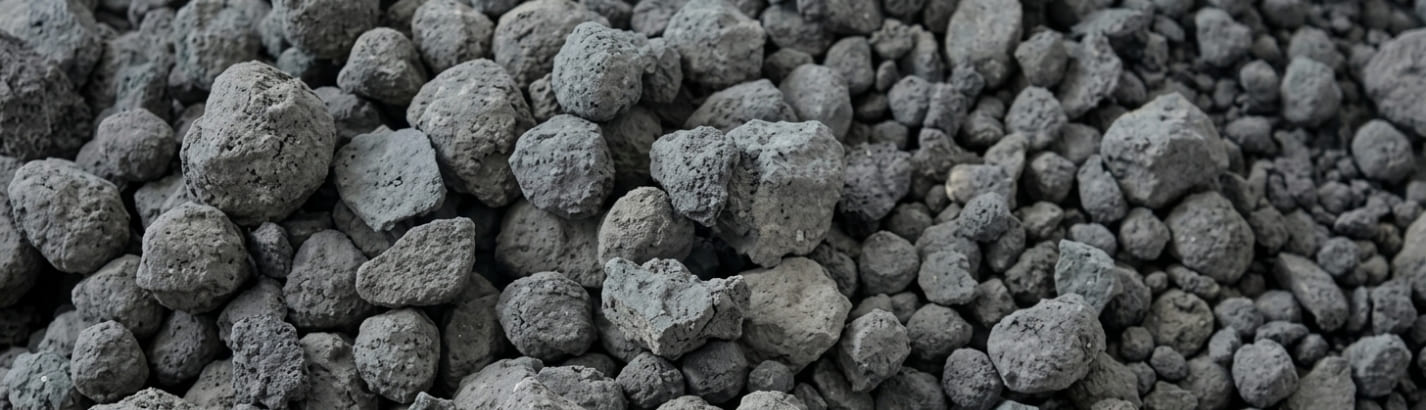
In simple terms, cement clinker is the intermediate material formed inside the kiln during the cement-making process. It appears as small lumps or pebble-sized nodules. It is not used directly as a finished construction product. It must first be finely ground with gypsum so that it can become cement with the required setting and binding properties.
Its importance lies in the fact that clinker quality directly affects cement quality. The strength of cement, its durability, and its performance under different conditions depend heavily on the clinker used to make it. Since cement is a basic building material in most structures, the role of clinker is practical and important from the very beginning of production.
A typical high strength clinker chemical composition consists of 62-65% CaO, 18-22% SiO₂, 3-8% Al₂O₃, and 0.5-6% Fe₂O₃, with smaller quantities of MgO and SO₃. The precise control of these constituents is essential to ensure consistent clinker quality, cement strength, durability, and production efficiency.
The essential role of clinker in cement production
Clinker is the main ingredient in cement. It is the material that largely decides how cement will behave when water is added. Once cement paste is formed, it starts setting and then gains strength over time. Because clinker controls these basic properties, it remains one of the most important parts of cement manufacturing.
Its role also matters because cement is used in permanent works. Foundations, slabs, walls, plaster, and masonry all depend on cement performance. Once placed, cement cannot be easily removed or replaced without major effort. For that reason, clinker quality has a direct link with long-term stability and with reducing the need for repairs later.
The process of making clinker in a cement plant
Clinker production follows a clear manufacturing sequence. Each step contributes to the final structure and properties of the material.
1. Raw material crushing and Grinding
The primary raw materials used for clinker production are limestone and clay. These are usually sourced from quarries and then transported to the cement plant for further processing. Clinker is produced from a precisely proportioned mixture of:
Limestone (source of CaO)
Clay/Shale (sources of SiO₂, Al₂O₃, and Fe₂O₃)
Corrective materials such as iron ore, bauxite, or sand
The materials are crushed and ground into a fine homogeneous powder known as raw meal. Raw meal chemistry is controlled through parameters such as:
Lime Saturation Factor (LSF)
Silica Modulus (SM)
Alumina Modulus (AM)
Proper raw meal homogenization is essential for stable kiln operation and consistent clinker quality. The fine grinded powder is further kept in a blending silo where it is homogenise before entering in preheater for calcination.
2. Preheating
The raw meal enters a multi-stage cyclone preheater system where it is heated by counter-current kiln exhaust gases.
Temperature range: 700-900°C
Objectives
Remove residual moisture
Initiate decomposition of limestone
Increase thermal efficiency and reduce fuel consumption in the kiln
Heat recovery in the preheater significantly improves overall plant energy efficiency.
3. Precalcination
Modern cement plants utilize a precalciner, where 90-95% of limestone calcination occurs before kiln entry.
Main Reaction
CaCO3→CaO +CO2
Benefits
Increased kiln capacity
Lower specific fuel consumption
Improved process stability
4. Clinkerization in the Rotary Kiln
The rotary kiln is the heart of clinker production.
As material moves through the kiln, it passes through several reaction zones.
Calcination Zone (900-1100°C)
Remaining limestone decomposes completely to lime.
Transition Zone (1100-1250°C)
Solid-state reactions begin between lime, silica, alumina, and iron oxide.
Burning Zone (1250-1450°C)
A liquid phase develops, allowing rapid formation of clinker minerals.
5. Formation of Major Clinker Minerals and composition of clinker:
The quality of clinker is determined by the proportions of four primary mineral phases.
Mineral Phase | Abbreviation | Typical Content (%) | Primary Function |
|---|---|---|---|
Alite | C₃S | 50-70 | Early strength |
Belite | C₂S | C₂S | Long-term strength |
Tricalcium Aluminate | C₃A | C₃A | Setting characteristics |
Tetracalcium Aluminoferrite | C₄AF | C₄AF | Fluxing action and burnability |
Key Reactions:
Alite Formation | 3CaO+SiO2→C3S |
|---|---|
Belite Formation | 2CaO+SiO2→C2S |
Aluminate Formation | 3CaO+Al2O3→C3A |
Ferrite Formation | 4CaO+Al2O3+Fe2O3→C4AF |
The resulting clinker appears as dark grey nodules, typically 3-25 mm in diameter.
6. Clinker Cooling
Hot clinker leaves the kiln at approximately 1400°C, enters in a grate cooler. Generally cooled to below 100°C before storage.
Importance of Rapid Cooling
Preserves reactive alite crystals
Improves cement strength
Prevents undesirable phase transformations
The chemical composition of cement at the clinker stage
The behaviour of cement depends heavily on the compounds present in clinker. The four main clinker compounds are alite, belite, aluminate, and ferrite. Each of these contributes differently to setting and strength development.
Alite
Alite, also known as tricalcium silicate or C3S, is the primary constituent of clinker. It generally makes up around 50 to 70 percent of the clinker composition. It reacts quickly with water and contributes significantly to early strength development.
Belite
Belite, also known as dicalcium silicate or C2S, generally makes up around 15 to 30 percent of clinker. It reacts more slowly with water than alite. Because of this, it contributes less to early strength but plays a major role in long-term strength development.
Aluminate
Aluminate, also known as tricalcium aluminate or C3A, usually forms around 5 to 10 percent of clinker. It hydrates rapidly when it comes into contact with water and contributes to the early setting of cement.
Ferrite
Ferrite, also known as tetracalcium aluminoferrite or C4AF, generally makes up around 5 to 15 percent of clinker. It has lower hydraulic properties than the silicate compounds, but it still contributes during the later stages of cement hydration and supports strength development.
These compounds together explain why clinker has such a strong effect on cement performance. They influence how fast cement sets, how quickly it gains early strength, and how it performs over a longer period.
Role of clinker in cement hydration
The role of clinker continues after cement is produced. When cement is mixed with water, the clinker compounds begin to react. This process is known as cement hydration. It is the process through which cement starts setting and then gradually hardens.
Different clinker compounds behave differently during hydration. Alite contributes more to early strength. Belite contributes more to long-term strength. Aluminate supports early setting, while ferrite contributes in the later stages. Because of this, the composition of clinker directly affects how cement behaves from the initial stage to later age strength development.
What are the different types of clinkers in cement?
Different types of clinker are produced for different cement and construction requirements.
OPC cement clinker
This is the most common type of clinker. It is used in the manufacture of OPC cement and is widely applied in general construction because of its reliable strength and broad usability.
Sulphate resistant clinker
This type is used where resistance to sulphate attack is required. It is suitable for structures exposed to sulphate-bearing soil, water, or chemical conditions. It is also used in harsh exposure conditions such as marine environments.
Low heat clinker
Low heat clinker is used where reduced heat generation is important. It helps reduce the heat produced during cement hydration. This makes it useful in large concrete pours or mass concrete work, where excess heat can lead to cracking.
White clinker
White clinker is used to produce white cement. It is generally selected for decorative applications and for work where appearance matters. It is associated with low iron and manganese content.
Rapid hardening clinker
This type is used when quick strength gain is needed. It is suitable for applications such as road work and repairs where early strength is important.
Low-alkali clinker
Low-alkali clinker is produced with reduced alkali content. It is used to minimize the risk of alkali-aggregate reaction in concrete, which can lead to cracking and deterioration.
BCT clinker
Belite calciumsulphoaluminate ternesite clinker is another type of clinker. It is designed to reduce carbon dioxide emissions and improve energy efficiency during production. It also supports lower electricity costs in the manufacturing process.
What is cement clinker used for?
The main use of clinker is in cement production. Once it is ground with gypsum, it becomes the base of different cement types used in construction. These cement types are then used in concrete, plaster, and cement mortar.
Its uses can be understood through the applications it supports. For general construction, clinker is used in OPC cement. For structures exposed to sulphate conditions, sulphate resistant clinker is used. For decorative work, white clinker is preferred. For time-sensitive work that needs quick strength gain, rapid hardening clinker is suitable. For large concrete pours, low heat clinker is used because it helps control heat generation.
Clinker also supports the basic binding action of cement. After it is processed into cement, it reacts with water and allows the material to set and harden. This is the reason cement can hold together aggregates and function as a dependable building material in a wide range of construction projects.

Cookies help us display personalized product recommendations and ensure you have a great experience.
Accept Cookies