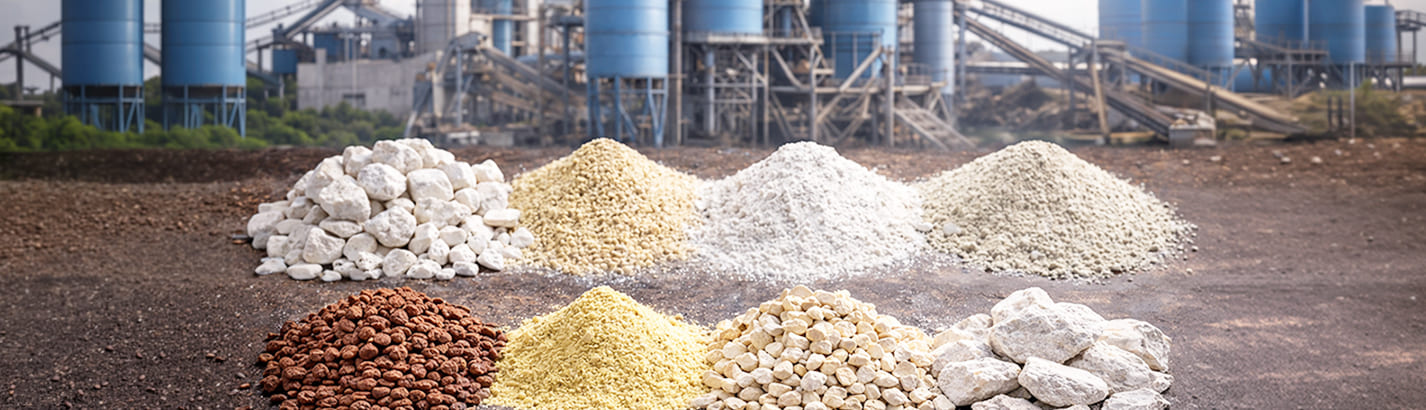
Understanding the Chemical Composition of Cement and Why Each Ingredient Matters
- Apr 2
- 2 min read
TL;DR
The raw materials for cement manufacturing, the resulting chemical composition of cement, and the control maintained during the cement manufacturing process together determine the cement quality and how it performs in construction. Since each ingredient in cement plays a specific role, the right balance of these constituents directly affects important properties such as strength, setting time, soundness, durability, and workability.
What is cement made of?
The following table shows the elements that go into the chemical composition of cement and clearly outlines their individual percentages and roles:
Ingredient | Typical percentage in cement | Main role |
|---|---|---|
Lime | 60–65% | Supports strength formation |
Silica | 19–25% | Helps form compounds that give strength |
Alumina | 3–8% | Supports quick setting |
Magnesia | 1–3% | Adds toughness and colour |
Iron Oxide | 0.5–6% | Contributes to colour, hardness, and strength |
Sulfur Trioxide | 1–3% | Helps make cement sound |
Alkali | 0–1% | Present in small quantity, but excess can create issues |
Gypsum / Calcium Sulfate | Small controlled quantity | Regulates setting time |
The chemical composition of cement has a direct effect on how cement behaves in construction. It influences strength, setting time, soundness, durability, and workability. Cement may look like a uniform powder, but it is made of several constituents, and each one contributes something specific to performance.
A functional outline of the constituents involved in composition of cement.
Constituent | Benefit when balanced properly | Issue when not controlled |
|---|---|---|
Lime | Helps develop strength | Excess causes unsoundness; low quantity reduces strength |
Silica | Supports strength | Excess can increase setting time |
Alumina | Helps quick setting | Excess can reduce sulphate resistance |
Magnesia | Adds toughness | Excess can affect stability and lead to cracking |
Iron Oxide | Adds hardness and colour | Needs proper proportion for balanced performance |
Gypsum | Controls setting time | Poor control affects workability |
Sulfur Trioxide | Supports soundness | Excess can make cement unsound |
Alkali | Acceptable in small quantity | Excess may lead to cracking and deposits |
This understanding of the composition of cement also helps when comparing opc cement, ppc cement, and the broader idea of Portland cement composition, because the final performance of any cement type still depends on the balance and control of these main constituents. To understand how these ingredients affect actual construction performance, you can also read our detailed guide on key components of cement construction materials.

Cookies help us display personalized product recommendations and ensure you have a great experience.
Accept Cookies