Cement Choices That Reduce Cracks, Repairs & Repainting Costs
- Feb 23
- 4 min read
Cracks in concrete and walls are often seen as unavoidable. But in most cases, they stem from various choices at the start, especially the selection of cement. The ones who address this early can avoid recurring maintenance costs such as surface patchwork, waterproofing, and premature repainting.
Why do cracks appear in concrete and walls?
Concrete undergoes a range of stresses even before a structure is completed. Shrinkage during drying, thermal contraction, overloading, and settlement can all lead to concrete crack formation. Inadequate curing or poor mixing also increases this risk.
In walls, small fissures or linear cracks may form vertically, diagonally, or near joints and openings. These wall cracks can expand over time, especially if moisture enters the surface and causes internal degradation. In many cases, frequent crack fillings and repainting become part of the maintenance cycle.
These problems are not always caused by workmanship. Often, the material itself doesn’t offer enough resistance to cracking under thermal or mechanical stress.
The impact of concrete workability on surface quality
Concrete workability refers to how easily concrete can be placed, compacted, and finished. Low workability leads to poor compaction, uneven distribution, and air gaps in the mix. This directly contributes to internal cracking and weak zones in concrete.
Cements with good fineness and consistency improve the flow of concrete where better workability reduces the risk of shrinkage cracks and improves placement around reinforcements and corners.
Proper workability also reduces the need for rework and patching, saving on labor and surface treatment costs.
Wall Crack Repair: What is it and how to prevent it?
A wall crack repair may seem minor at first, but the cumulative cost of repeat repairs, waterproofing, and repainting adds up. Hairline cracks can usually be sealed with putty or fillers. However, structural cracks require methods like epoxy injection, grouting, or even surface recasting.
The total cost goes beyond just materials. Labor, surface prep, and finishing raise the expense significantly. More importantly, the same cracks often return if the base material issues are not addressed.
By starting with the right cement, especially in plastering and surface work, much of this can be prevented.
The role of cement in controlling cracks
Cement is the binding agent that defines the strength, setting time, and crack resistance of concrete. The type of cement used determines how the structure behaves under drying, curing, and load conditions.
Some cement types generate more heat during hydration, which increases the chance of shrinkage-related cracks. Others may not provide enough fineness or bonding capacity, leading to weaker joints and poor surface finish.
Choosing the right cement at the start reduces the chances of these issues surfacing later
What is the best cement for controlling cracks?
There is no single cement that works for every structure or climate. Among the types of cement used in residential and commercial construction, when it comes to controlling cracks and improving surface durability, PSC cement is often considered a good choice.
PSC Cement or Portland Slag Cement (PSC) is produced using granulated blast furnace slag, which makes the cement highly resistant to moisture-induced damage. PSC generates lower heat of hydration and is ideal for applications where thermal cracking is a risk. It is suitable for both foundations and plastering work in regions with high humidity or temperature variation. Its fine particle structure provides good long-term durability and finish quality.
Bangur Cement - The brand you can trust
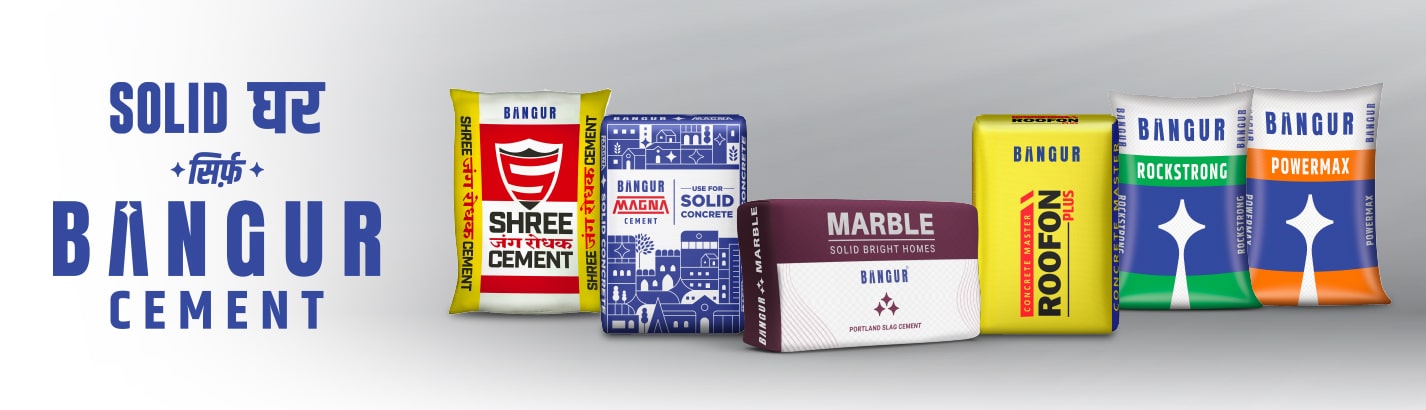
Marble Cement, as offered by Bangur Cement under the PSC category, is designed for interior and exterior work where smoothness and colour consistency matter. It is particularly effective in delivering a bright, uniform surface with minimal porosity. This reduces hairline surface cracks and improves paint adhesion, lowering the frequency of repainting.
Long-term maintenance costs often begin with short-term compromises in material selection. A small upgrade in cement type can reduce the risk of concrete cracks, avoid recurring costs for wall crack repairs, and help maintain the finish of the surface for a longer period of time. This is where Bangur Cement comes in with top-quality cement products that ensure
Looking for the right materials for your next construction project? Get a quote from Bangur Cement and find what fits your needs.

Cookies help us display personalized product recommendations and ensure you have a great experience.
Accept Cookies