Common Mistakes to Avoid While Making Concrete Mix
- Jan 16
- 7 min read
Concrete is the backbone of almost every structure we see around us. From small residential slabs to large commercial foundations, the quality of concrete determines how strong and durable the final structure will be. Yet many people underestimate how sensitive the process of concrete mixing actually is. Small mistakes in the proportions, timing, or handling of materials can weaken the entire mix. Understanding these issues is important if you want to avoid costly repairs or structural problems in the future.
Concrete may seem simple at first glance. You take cement, sand, aggregate, and water, then mix everything together. But the real strength of concrete lies in how well these components are measured, blended, and cured. This blog explores the most common mistakes people make while preparing concrete, especially when they overlook the correct concrete mix ratio and the importance of following a proper concrete mix ratio by volume.
1. Guessing the Concrete Mix Ratio Instead of Measuring Accurately
The biggest and most common mistake in concrete mixing happens right at the start when people estimate proportions instead of measuring them carefully. Concrete needs precise ratios because each component plays a unique role. Cement acts as the binder, sand fills the small gaps, and aggregate adds bulk and stability.
When you guess the ratio, you risk creating a mix that is either too weak or too brittle. For example, adding too little cement reduces the binding strength, while adding too much cement makes the mix shrink excessively and crack. Even slight changes in the concrete mix ratio by volume can affect workability, curing, and final strength.
A typical general-purpose ratio is 1:2:4 (one part cement, two parts sand, four parts aggregate), but this can vary depending on the structure. For footpaths, driveways, foundations, or slabs, the ratios differ. That is why accurate measurement is essential.
2. Adding Too Much Water for Convenience
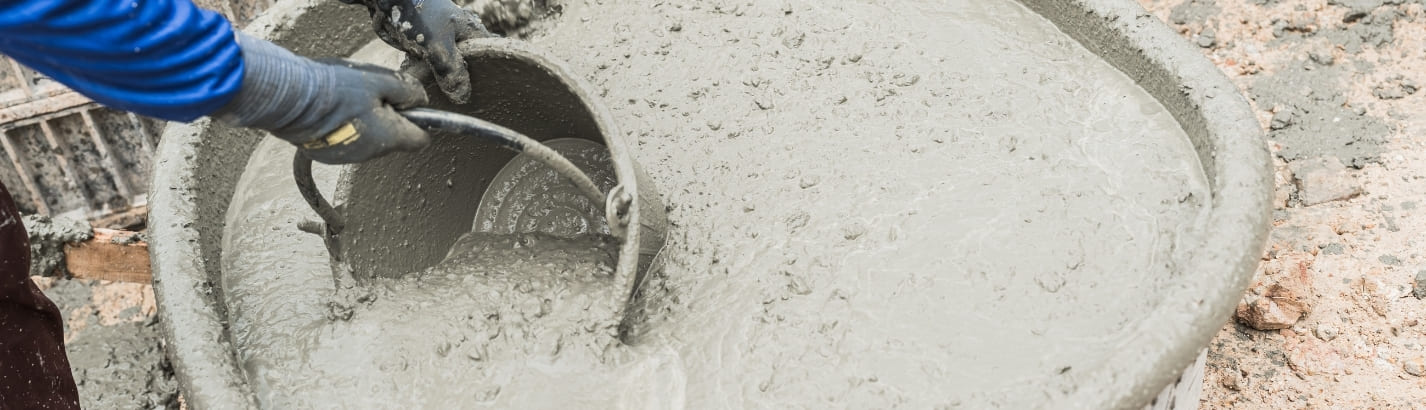
Water activates cement and starts the hardening process, but adding too much water is one of the most damaging mistakes. Many beginners think adding extra water will make the mix easier to stir and pour. While that is true, it comes at a cost. Extra water weakens the concrete by creating voids as it evaporates. These voids reduce density, strength, and durability.
The ideal concrete mix looks moist and workable, not soupy. Too much water leads to dusting, cracking, surface weakness, and reduced load-bearing capacity. Professionals always follow a proper water-to-cement ratio and adjust only when necessary, such as during extremely hot weather.
3. Ignoring the Quality of Raw Materials
Even if you follow the perfect mix ratio, low-quality materials can ruin the final concrete. Sand that contains clay or organic material interferes with the binding process. Aggregates coated with dust or mud do not bond well with cement paste. Similarly, using damaged or lumpy cement weakens the result.
Clean, dry, and high-quality materials ensure better consistency during concrete mixing. If aggregates are dirty, they should be washed. If sand looks contaminated, it should be screened or replaced.
Skipping this step may seem harmless, but the resulting concrete often ends up weaker and more prone to cracking, especially during seasonal temperature changes.
4. Mixing for Too Little or Too Long
The goal of mixing is to coat every particle of sand and aggregate evenly with cement paste. Under-mixing leaves dry pockets, while over-mixing causes separation. Both affect the strength and workability of the concrete.
Hand mixing is more likely to result in uneven batches because it is harder to maintain consistency. Machine mixing provides better results but must still be monitored for timing. The ideal mixing time depends on the materials and mixing method, but rushing the process increases the risk of poor bonding.
A properly mixed concrete batch should look uniform, without clumps of cement or pools of water.
5. Delay in Pouring the Concrete After Mixing
Once water is added to cement, a chemical reaction begins immediately. This reaction does not pause, even if you delay pouring. Long delays between mixing and placement lead to early setting, making the concrete less workable and harder to compact.
As a result, the concrete forms cold joints, which are weak zones that compromise structural integrity. To avoid this, the worksite must be prepared before mixing starts. Tools, moulds, and workers should be ready so that placement happens smoothly and quickly.
6. Poor Compaction After Pouring
Compaction removes trapped air from the mix. If concrete is not compacted properly, these air pockets remain inside the slab, reducing its density and strength. This problem is especially common when people rely too much on pouring instead of spreading and compacting.
Light tapping or vibration helps remove air bubbles. For larger pours, mechanical vibrators are often used. Proper compaction improves durability and prevents issues like honeycombing, where voids appear on the surface.
7. Ignoring Weather Conditions During Mixing and Curing
Weather affects the entire process of concrete mixing and curing. Many beginners overlook this factor, but temperature and humidity impact how quickly concrete sets and how strong it becomes.
In hot weather:
Concrete sets too fast. Water evaporates quickly, which leads to cracks. More frequent curing, shade, and controlled water content become important.
In cold weather:
Setting slows down. If temperatures drop too low, water can freeze in the concrete, causing long-term damage. Extra insulation, warm water, or controlled environments help manage this issue.
Adjusting the concrete mix ratio or water volume slightly may be necessary depending on the climate, but always follow expert guidance rather than guesswork.
8. Not Following Proper Curing Methods
Curing is as important as mixing. Even a perfect concrete mix ratio will fail if curing is neglected. Concrete needs to stay moist to continue strengthening. Without proper curing, the concrete loses moisture too quickly, causing shrinkage cracks, reduced strength, and surface weakness.
Common curing mistakes include:
Allowing concrete to dry out too fast
Not covering the concrete during hot weather
Not spraying water regularly
Skipping curing entirely after the first day
Good curing lasts at least seven days for most structures, although some projects require longer.
9. Using a Single Mix Ratio for All Purposes
Many people assume that one standard concrete mix ratio works for everything. However, different structures require different strengths. For example, a driveway needs a stronger mix than a garden pathway. A foundation needs a different mix than a plaster surface.
Relying on one universal ratio leads to underperformance in certain areas. Always check the recommended concrete mix ratio by volume for the specific task. This ensures proper load-bearing capacity, durability, and safety.
10. Skipping Expert Guidance When Needed
Finally, while DIY concrete mixing is common, certain projects require professional oversight. Large slabs, multi-story foundations, retaining walls, or reinforced structures depend on accuracy and expert knowledge. Skipping professional input can lead to structural failures that are expensive to repair.
Engineers consider load requirements, soil conditions, climate, and curing methods before recommending a mix. Even simple projects benefit from understanding these factors.
Conclusion
Concrete mixing is more than just combining cement, sand, aggregate, and water. It is a process that requires precision, attention, and planning. Mistakes such as inaccurate mix ratios, excess water, poor compaction, ignoring weather, or skipping curing may seem small, but they have long-lasting consequences.
By understanding the correct concrete mix ratio, following the appropriate concrete mix ratio by volume, and avoiding the common mistakes listed above, you can achieve a stronger and more durable structure. Whether you are working on a small home project or a large construction site, good concrete practices ensure that the final product remains safe and reliable for years to come.

Cookies help us display personalized product recommendations and ensure you have a great experience.
Accept Cookies