How Mixing and Curing Define Your Concrete's Strength
- Nov 17
- 3 min read
The final concrete strength of a building isn't guaranteed just by pouring concrete. It's a potential that gets either achieved or lost based on two critical phases: concrete mixing and concrete curing. Getting the mix right sets the foundation, but the curing process determines whether the concrete ever reaches its designed strength.
The concrete mixing process is where quality control begins. Whether mixing large batches at a plant or doing on-site cement mixing, the goal is uniformity and most importantly, the correct water-to-cement ratio. Adding extra water makes concrete easier to work with, but this common shortcut permanently weakens the final structure by creating a more porous, weaker material.
The Science of Strength: Cement Hydration
Once the concrete is poured, its hardening is driven by a chemical reaction called cement hydration. This process of hydration creates strength. Cement particles react with water to form new, crystalline bonds that interlock and grip the sand and stone aggregate, welding them into a single, solid mass.
This chemical process is the key to everything. It requires two things to continue: time and the presence of water.
Read Also: Rapid Hardening Cement: What It Is & When to Use It
What is the Concrete Curing Process?
The process of curing is the act of actively managing the concrete's environment to ensure the hydration reaction can complete. The goal is to protect the concrete, primarily by preventing the mix water from evaporating prematurely.
If new concrete is left exposed, especially in hot or windy conditions, the water at the surface evaporates. This starves the chemical reaction, which simply stops. This halt is irreversible and leaves the concrete permanently weaker than it was designed to be.
A proper curing method is essential to prevent this. Common methods include:
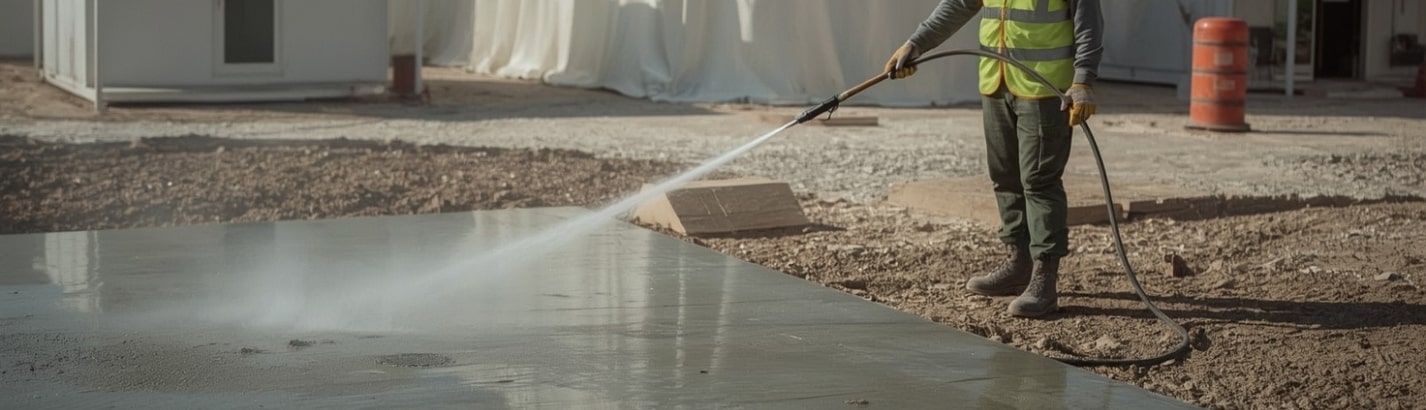
Ponding: Building small barriers and flooding the slab surface with water.
Wet Coverings: Using burlap or cotton mats that are soaked and laid on the surface to hold moisture.
Sealing: Spraying a chemical "curing compound" that forms a thin film to trap the mix water inside.
Read Also: Cement Curing Guide for Building a Solid Home
How Many Days Does Curing of Concrete Take?
The process of hydration is fastest during the initial phase. For this reason, the concrete curing time is most critical in the first week. Concrete can achieve up (and sometimes over) 70% of its final specified strength within these first 7 days.
Because of this, a 7-day curing period is generally considered the absolute minimum for most structural projects to ensure durability and strength.
Why is Concrete Cured for 28 Days?
The 28-day mark is the most famous benchmark in concrete. This is not because the curing stops at 28 days, but because this is the industry-standard age at which concrete is tested to verify its full "design strength" (e.g., the strength an engineer specified).
How long does it take for concrete to hydrate?
The hydration reaction slows down significantly over time, but it can continue for months or even years, as long as moisture is present. The 28-day standard simply represents the point where the concrete is considered to have achieved its practical, specified strength for all engineering and construction purposes.

Cookies help us display personalized product recommendations and ensure you have a great experience.
Accept Cookies