What Is Mivan Construction?
- Jan 15
- 6 min read
The construction industry has evolved rapidly over the past few decades, and one technology that has made a noticeable impact is Mivan construction. Known for its speed, accuracy, and clean finish, Mivan technology is now widely used in large residential projects, high-rises, and mass-housing developments. If you’ve ever wondered why developers promote “Mivan-formwork buildings” as a premium feature, this guide will walk you through everything: what Mivan construction is, how it works, its advantages, drawbacks, and how it compares to traditional brick construction.
Before diving into the comparison, let’s start with the basics.
What Is Mivan Construction?
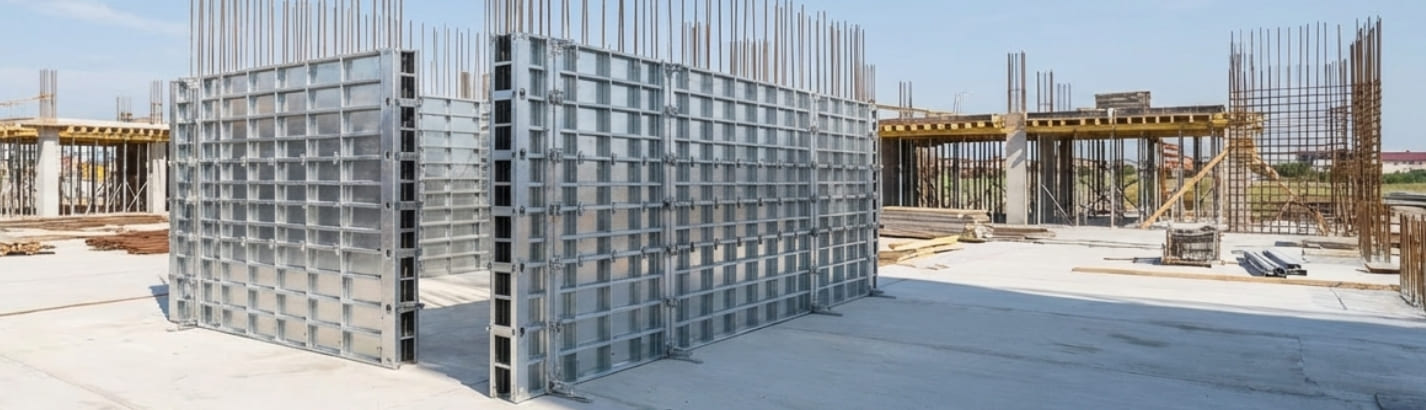
Mivan construction is a modern building technique that uses aluminium formwork to cast entire structural components, walls, slabs, beams, and columns, using fresh concrete poured into moulds. The term comes from Mivan Company Ltd., Malaysia, the firm that originally developed this technology.
Instead of building walls with bricks or blocks, Mivan relies on monolithic concrete casting, meaning the whole structure is formed as a single concrete shell.
Key Characteristics
Uses lightweight aluminium shuttering
Produces uniform wall thickness and smooth finishes
Casts walls and slabs together instead of separately
Offers fast repetition cycles, enabling one floor per 7–10 days
This approach drastically changes how buildings are constructed, especially in high-volume residential projects.
What Is Mivan Shuttering?
In traditional construction, shuttering (or formwork) refers to temporary moulds used to hold wet concrete until it sets. Mivan shuttering takes the same concept but upgrades it with precision-engineered aluminium panels.
Features of Mivan Shuttering
Made of high-strength aluminium alloy
Very lightweight, easy to assemble and remove
Designed to interlock, creating a stable mould
Custom-made for each project’s layout
Can be reused 150–200+ cycles, making it ideal for mass production
Because every panel is pre-designed, the shuttering process looks more like assembling a kit than improvising on-site.
How Mivan Construction Works (Step-by-Step)
To understand how Mivan technology achieves speed, it’s important to look at the complete workflow.
1. Planning and Design
The building is first planned using detailed drawings. Since Mivan panels are custom-made, the design stage involves high precision.
2. Fabrication of Aluminium Panels
Panels are manufactured based on architectural and structural drawings. Each panel corresponds to a specific wall or slab section.
3. Assembly on Site
Workers assemble the panels like a large 3D puzzle:
Wall panels
Beam panels
Deck panels (for slabs)
Support props
The system ensures no gaps, which leads to smooth finishes.
4. Reinforcement Placement
Steel bars are placed inside the formwork. Any plumbing or electrical conduits meant to pass through concrete walls must be fixed before the pour.
5. Concrete Pouring
Fresh concrete is poured into the assembled moulds. Since the structure is monolithic, the walls and slabs are cast together.
6. Curing and De-shuttering
Within 24–48 hours, the panels are removed, and the freshly cast structure reveals smooth walls that need very little plastering.
A floor cycle can be completed every 7–10 days, which is fast compared to brick-and-mortar methods.
Applications of Mivan Technology
Mivan construction is widely used in:
High-rise residential towers
Mass housing under government projects
Affordable housing schemes
Township developments
Hotels and dormitory blocks
Any project that needs speed, repetition, and uniformity benefits from this technology.
Mivan Construction vs Brick Construction: A Deep Comparison
One of the most common questions people ask is how Mivan compares to traditional brick construction. Here is an in-depth breakdown.
1. Construction Speed
Mivan Construction
One slab can be completed in 7–10 days
Panels are reused floor after floor
Casting walls + slabs together saves time
Brick Construction
Slower due to separate processes (brickwork, curing, plastering)
Dependent on skilled masons
Weather delays occur more frequently
Verdict: Mivan is significantly faster.
2. Strength and Durability
Mivan Construction
Monolithic concrete structure with no joints
Durable and long-lasting
Brick Construction
Multiple joints reduce structural uniformity
Strength depends heavily on workmanship
Not as resistant to seismic forces
Verdict: Mivan offers superior strength and uniformity.
3. Finishing Quality
Mivan Construction
Smooth, uniform walls
Very little plastering is required
Perfect alignment
Brick Construction
Needs thick plaster to correct alignment
Finishing depends on the mason's skill
Walls may have variation
Verdict: Mivan wins due to better accuracy and a cleaner finish.
4. Flexibility in Design Changes
Mivan Construction
Low flexibility
Once panels are fabricated, design changes are difficult
Electrical and plumbing must be pre-planned
Brick Construction
High flexibility
Easy to modify walls, openings, and duct spaces
Suitable for customised homes
Verdict: Brick construction is more flexible for changes.
5. Cost Comparison
Mivan Construction
Higher initial investment
Aluminium formwork is expensive
Best suited for large-scale projects
Brick Construction
Lower initial cost
Labour varies, but overall cheaper for small projects
Verdict: Mivan is cost-effective only for large developments.
6. Maintenance and Long-Term Performance
Mivan Construction
Fewer cracks due to the uniform structure
Water seepage risk is lower
Better for long-term maintenance
Brick Construction
More susceptible to cracks
Plaster maintenance required
Seepage can occur through joints
Verdict: Mivan offers better durability and low maintenance.
Advantages of Mivan Construction
Mivan has several strengths that make it popular among developers.
1. Fast Construction Cycles
Rapid floor cycles reduce project timelines and costs.
2. High Structural Quality
Monolithic RCC structure performs better during earthquakes and heavy loads.
3. Smooth Finishes
Walls come out clean, saving costs on plaster and finishing.
4. Great for Mass Housing
Because panels can be reused hundreds of times, it's ideal for repetitive layouts.
5. Reduced Wastage
Material waste is significantly lower compared to brick construction.
6. Long-Term Durability
Crack formation is minimal due to the uniform casting process.
Disadvantages of Mivan Construction
Even with all the benefits, there are drawbacks you should know.
1. High Initial Cost
Aluminium formwork systems are expensive.
2. Not Suitable for Custom Homes
Design changes are almost impossible once panels are made.
3. Needs Skilled Labour
Workers must be trained to assemble and handle the formwork system.
4. Hollow Sound in Walls
Some homeowners feel Mivan walls sound slightly hollow when tapped due to their thin but dense structure.
Is Mivan Construction Better Than Brick Construction?
There is no one-size-fits-all answer. Each method works best in its domain.
Choose Mivan Construction if:
You’re building high-rise towers
Speed is a priority
Uniformity and durability are essential
You’re developing mass-housing projects
Choose Brick Construction if:
You want flexibility in the floor plan
You’re building a single home
You want lower initial costs
You prefer tried-and-tested methods
Frequently Asked Questions (FAQs)
1. Is Mivan construction earthquake-resistant?
Yes. The monolithic concrete structure performs much better in seismic zones.
2. Is Mivan construction expensive?
Initial costs are high, but overall costs become manageable in large multi-unit projects.
3. Do Mivan buildings develop cracks?
Minor cracks may appear due to shrinkage, but they are significantly fewer than in brick structures.
4. Can interior modifications be done later?
Major changes are difficult since walls are part of the structural frame.
5. Is Mivan better for high-rise buildings?
Yes. It ensures safety, speed, and strong overall performance.
Final Thoughts
Mivan construction has become a powerful option for large-scale and high-speed construction projects. Its accuracy, durability, and fast progress make it ideal for developers and contractors. While brick construction still has a place in smaller or customised homes, Mivan is the future for large developments that demand consistency and speed. Understanding the difference helps homeowners and professionals choose the right method for each project.

Cookies help us display personalized product recommendations and ensure you have a great experience.
Accept Cookies