Cement HSN Code and GST: A Simple Guide for Home Builders and Contractors
- Jul 24
- 5 min read
Whether you're building your dream home, managing a construction project, or purchasing cement in bulk, understanding the Cement HSN Code and GST on Cement can help you make informed financial decisions. While these may seem like technical tax terms, they directly affect the cost of construction materials and project budgeting.
Different types of cement, such as Ordinary Portland Cement, Portland Pozzolana Cement, and Portland Slag Cement, are widely used in residential, commercial, and infrastructure projects. Knowing how these products are classified under the Goods and Services Tax (GST) system can simplify purchasing, invoicing, and tax compliance.
In this guide, we'll explain cement HSN codes, GST rates, common cement types, and why this information matters for homeowners, contractors, and builders.
What is an HSN Code?
HSN stands for Harmonized System of Nomenclature. It is an internationally accepted system used to classify goods for taxation and trade purposes.
In India, HSN codes are used under the GST regime to:
Classify products uniformly
Simplify tax administration
Standardize invoices
Reduce classification disputes
Support domestic and international trade
Every product sold under GST is assigned an HSN code based on its category.
What is the Cement HSN Code?
Cement falls under HSN Code 2523, which covers hydraulic cements, including varieties that harden when mixed with water.
The broad category includes:
Ordinary Portland Cement (OPC)
Portland Pozzolana Cement (PPC)
Portland Slag Cement (PSC)
White cement
Alumina cement
Other hydraulic cements
Common Cement HSN Classifications
HSN Code | Product Category |
|---|---|
2523 | Hydraulic cements (general category) |
25232100 | White cement, whether or not artificially coloured |
25232910 | Ordinary Portland Cement (OPC) |
25232920 | Portland Pozzolana Cement (PPC) |
25232930 | Portland Slag Cement (PSC) |
252390 | Other hydraulic cements |
Note: Businesses should always verify the applicable HSN classification for invoicing and compliance, as product specifications and tax notifications may change over time.
What is GST on Cement?
Under the current GST framework in India, cement is generally taxed at 28% GST. This rate applies to most commonly used cement products, including:
Portland Pozzolana Cement
Portland Slag Cement
White cement
Blended cement
The GST paid on cement becomes part of the total material cost for homeowners and contractors.
GST Breakdown
Item | GST Rate |
|---|---|
Cement | 28% |
Sand (varies by supply and classification) | May differ |
Bricks (depending on type and supplier) | May differ |
Steel | Separate GST classification |
Since construction projects involve multiple materials, understanding their GST treatment helps in preparing accurate cost estimates.
Why HSN Codes are Important
The correct Cement HSN Code is important for several reasons.
It helps in:
Preparing GST-compliant invoices
Avoiding tax disputes
Maintaining proper accounting records
Facilitating interstate trade
Simplifying procurement for contractors
For businesses registered under GST, using the correct HSN code is an important compliance requirement.
Different Types of Cement
India manufactures several types of cement, each designed for different construction needs.
Understanding their properties helps homeowners and contractors choose the right product for the job.
1. Ordinary Portland Cement (OPC)
Ordinary Portland Cement (OPC) is the most widely used cement in construction. It is produced by grinding cement clinker with gypsum and is available in different grades such as 33, 43, and 53 grade.
Applications
Residential buildings
Bridges
Roads
Foundations
Columns
Beams
Advantages
High early strength
Reliable structural performance
Suitable for most construction projects
Easy availability
2. Portland Pozzolana Cement (PPC)
Portland Pozzolana Cement (PPC) is manufactured by blending clinker with pozzolanic materials such as fly ash.
This improves durability and reduces heat generation during hydration.
Advantages
Better resistance to chemical attack
Lower heat of hydration
Improved long-term strength
Reduced permeability
Environmentally friendly due to fly ash utilization
Common Uses
Marine structures
Mass concrete works
Water-retaining structures
3. Portland Slag Cement (PSC)
Portland Slag Cement (PSC) contains granulated blast furnace slag along with clinker and gypsum.
It offers excellent durability, especially in aggressive environments.
Advantages
High resistance to sulphates and chlorides
Lower heat generation
Improved long-term durability
Suitable for coastal regions
Applications
Coastal construction
Sewage treatment plants
Industrial buildings
Bridges
Foundations in aggressive soil conditions
Comparison of Common Cement Types
Feature | Ordinary Portland Cement | Portland Pozzolana Cement | Portland Slag Cement |
|---|---|---|---|
Early Strength | High | Moderate | Moderate |
Long-Term Strength | High | High | High |
Heat of Hydration | Higher | Lower | Lower |
Chemical Resistance | Moderate | Good | Excellent |
Durability | High | High | Very High |
Best For | General RCC work | Residential & mass concreting | Coastal & industrial projects |
How GST Affects Home Construction Costs
Although GST is only one part of the overall project cost, it has a noticeable impact on the total budget.
GST influences:
Material procurement costs
Billing and invoicing
Cash flow for builders
Overall construction estimates
For homeowners purchasing cement directly, the GST is reflected in the purchase price.
For GST-registered contractors and businesses, the availability of input tax credit depends on the nature of the project and applicable GST provisions.
Tips for Buying Cement
When purchasing cement, consider more than just the price.
Check the following:
Manufacturing date
ISI certification
Proper storage conditions
Packaging integrity
Quantity required
Applicable GST invoice
Correct HSN code on the invoice (for business purchases)
These checks help ensure quality and proper documentation.
Why Quality Cement Matters
Regardless of the cement type you choose, quality plays a major role in the strength and durability of a structure.
Good-quality cement contributes to:
Durable RCC structures
Better bonding with aggregates
Improved crack resistance
Long service life
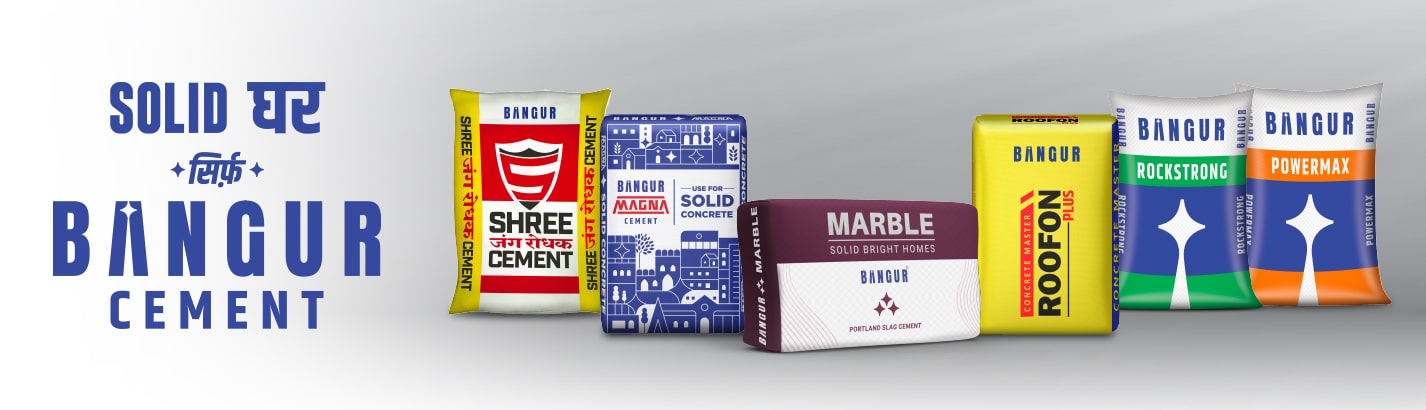
Many homeowners and contractors choose trusted brands such as Bangur Cement for residential and commercial projects because consistent quality supports reliable performance across foundations, slabs, columns, beams, and masonry work.
Common Mistakes to Avoid
Avoid these common errors when purchasing cement:
Choosing cement solely based on price
Ignoring the project's structural requirements
Using the wrong cement type for the application
Storing cement in damp conditions
Not checking manufacturing dates
Overlooking GST-compliant invoices for business purchases
Making informed choices can help improve construction quality and reduce avoidable costs.
Quick Reference Table
Topic | Key Information |
|---|---|
Cement HSN Code | 2523 (general category for hydraulic cements) |
GST on Cement | Generally 28% |
Most Common Cement Types | OPC, PPC, PSC |
Best Cement for General Construction | Ordinary Portland Cement |
Best Cement for Durability | Portland Pozzolana Cement and Portland Slag Cement |
Important Purchase Factors | Quality, grade, freshness, certification, GST invoice |
Final Thoughts
Understanding the Cement HSN Code, GST on Cement, and the different types of cement can help homeowners, contractors, and builders make better purchasing and budgeting decisions. While tax compliance is important for businesses, selecting the right cement for the project is equally critical to achieving long-term structural performance.
Whether you're using Ordinary Portland Cement, Portland Pozzolana Cement, or Portland Slag Cement, choosing a quality product from a trusted manufacturer is essential. Many construction professionals rely on brands such as Bangur Cement for consistent quality and dependable performance across a wide range of residential and commercial applications.

Cookies help us display personalized product recommendations and ensure you have a great experience.
Accept Cookies