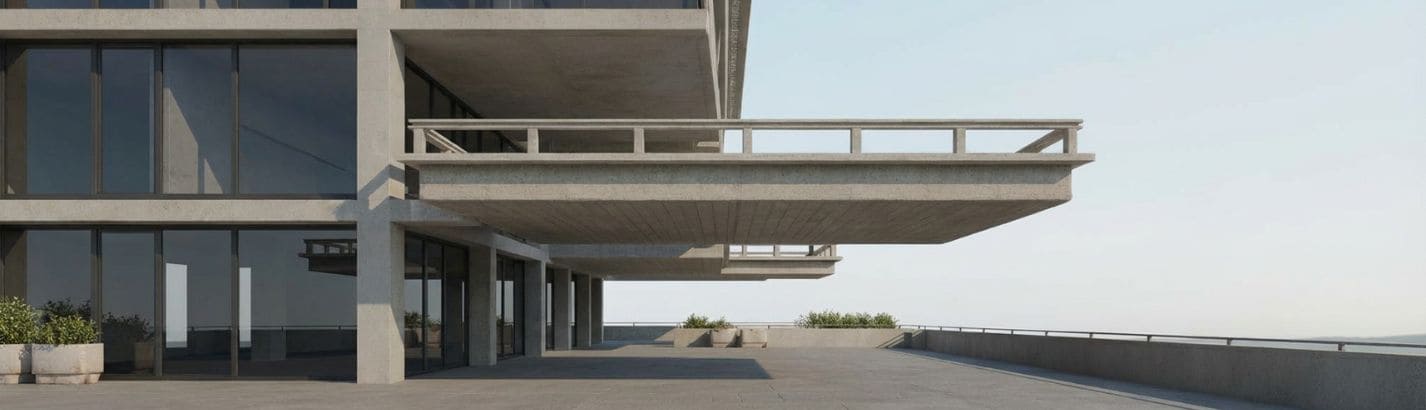
The Role of Cantilever Beams in Modern Construction
- Feb 9
- 4 min read
In house construction and other structural work beams are very important so as to ensure strength and load distribution. Among the many types of beams that are used in construction, the cantilever beam is preferred usually because of its design adaptability and utility in architectural features.
What Is a Cantilever Beam?
A cantilever beam is a horizontal structural element that extends outward from a single fixed point, with the other end remaining unsupported. It is designed to carry loads across its length without additional columns or walls underneath. These beams are commonly made using steel or reinforced concrete, materials that offer strength and stiffness against forces acting on the unsupported end.
Two standard methods are used for the construction of cantilever beams:
Cast-in-situ method: The beam is poured and set directly on-site using formwork.
Pre-stressed method: The beam is pre-tensioned off-site before being installed, thereby increasing its load-bearing capacity.
Common examples of cantilever applications include balconies, roof projections, canopies, and bridge segments. Now if you are wondering, where are cantilever beams commonly used in house and residential construction? Well, in a residential building, they are often used to create projecting verandas or sunshades without disturbing the space underneath.
How Do Cantilever Beams Work?
A cantilever beam transfers the weight applied on its free end back to its fixed support through internal bending and shear forces. The support must resist these forces entirely to maintain stability. Unlike beams with supports at both ends, cantilever beams concentrate stress at the fixed end, requiring careful engineering to avoid bending, rotation, or failure.
For instance, in a balcony, the beam is anchored inside the floor slab and projects outward. The material and geometry of the beam determine how effectively it can distribute stress and support the extended portion without movement or visible sag.
Understanding Deflection in Cantilever Beams
Deflection refers to the degree to which a beam bends when a load is applied. Cantilever beams tend to deflect more than other beam types because of their single-sided support system. Deflection can affect both structural safety and visual aesthetics, especially when it becomes noticeable.
The basic formula for calculating deflection (D) in a cantilever beam is:
D = (W × L³) / (3 × E × I)
Where:
W is the applied force
L is the length of the beam
E is Young’s Modulus (stiffness of the material)
I is the Moment of Inertia (resistance to bending)
Engineers use this calculation to ensure that the deflection stays within limits set by building codes and safety standards.
Common Use Cases of Cantilever Beams
Cantilever beams are used across multiple sectors of construction due to their ability to span space without intermediate supports. Key applications include:
Balconies and terraces in residential buildings
Roofs of stadiums or auditoriums
Crane arms in industrial setups
Sunshades and cantilevered canopies
Transmission towers and signboards
Why are cantilever beams preferred in modern construction designs?
In modern house construction, space optimization and design variety are essential. Cantilever beams help tick off the following requirements in such cases:
Maximized space: No supporting columns are needed underneath, leaving space open for movement or usage.
Cost-efficiency: Less material is used by eliminating secondary supports.
Architectural freedom: Enables modern design features such as wraparound balconies or extended roofs.
Strength and durability: Properly constructed reinforced concrete cantilevers withstand heavy loads with minimal maintenance.
These qualities make cantilevers a practical and aesthetic choice for homes, especially where overhanging extensions are part of the design.
Factors to Consider for Cantilever Beams Design
Several technical aspects influence the design of a cantilever beam:
Load analysis: Assessing all loads, including wind or seismic forces
Material properties: Elasticity, strength, and resistance to weathering
Deflection limits: Ensuring the beam does not bend beyond allowed values
Stress distribution: Managing concentration near the fixed support
Durability: Accounting for corrosion, fatigue, and long-term wear
Safety factors: Incorporating margin for unexpected load conditions
Construction method: Prefabricated vs on-site casting
Cost planning: Balancing upfront cost and long-term maintenance
Regulatory compliance: Aligning with legal standards and codes
Advantages and Disadvantages
The following table clearly shows the pros and cons of cantilever beams.
Advantages | Disadvantages |
|---|---|
Allows extended projections without columns | Requires detailed design and precision |
Keeps space below unobstructed | May deflect under load if not properly engineered |
Offers flexibility in architectural design | Heavier loads may need special reinforcement |
A cantilever beam plays an important role in modern construction especially where space and design are key priorities. This particular type of beam offers strength, stability, and spatial efficiency in both commercial and residential building applications and with proper design, it ensures safety as well as long-lasting performance.

Cookies help us display personalized product recommendations and ensure you have a great experience.
Accept Cookies